Stepping into a community leadership position was something Ram Siakhel felt a responsibility to do, to advocate and provide support for his community, especially young people.
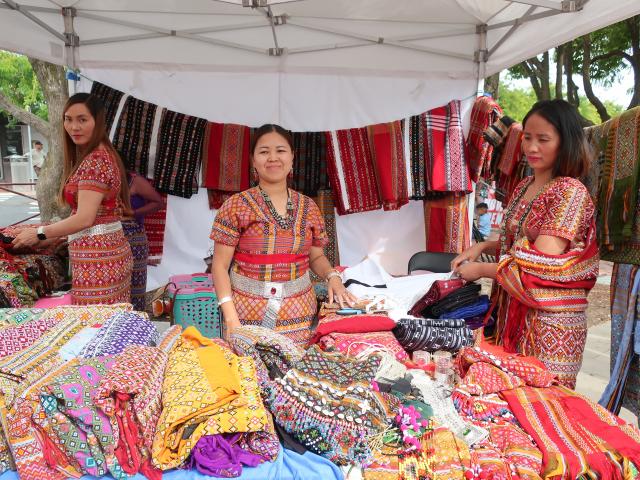
Ram is part of the Hakha Chin ethnic group, one of an estimated 130 ethnic groups in Myanmar (Burma), all with varying dialects and cultures.
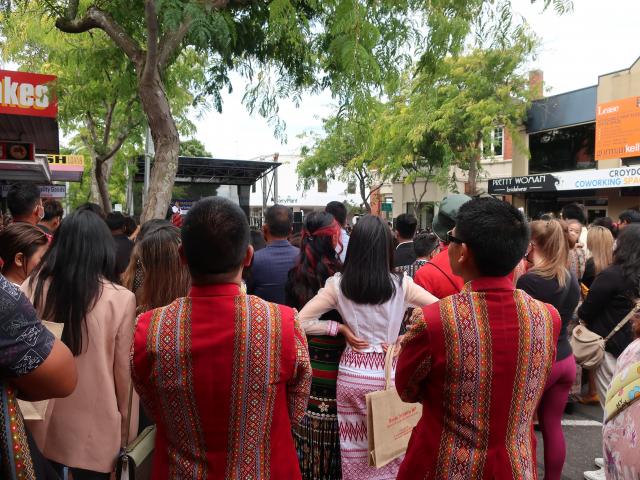
In the outer eastern suburbs of Melbourne, there are around five different Chin ethnic groups who have settled in suburbs like Mooroolbark and Croydon.
The Chin are a kind and quiet community who have a strong Christian faith, and values grounded in respect and doing what’s right.
Unfortunately, a small number of young people have found themselves on a path of criminal behaviour.
As secretary of the Australian Chin Community Eastern Melbourne (ACCEM), Ram said he has the opportunity to be a voice for his people.
A gang of about 30 to 40 young people has been active in the outer east for several years, but Ram said it is important for the broader community to know this behaviour is not supported.
“As a community, even though their number is very small, some of the things that they do are horrible,” he said.
“So, on behalf of the community, I can tell you we don’t support their behaviour. No one in the community supports what they are doing, breaking into other people’s houses, stealing cars, and engaging in reckless and dangerous driving.
“A number of people in our community are also the victims of this criminal activity, and it caused a significant division…a lot of people are angry because they are being labelled. There has been a lot of stereotyping happening.”
But to understand this behaviour, Ram said people first have to understand the generational trauma, financial struggles and language barriers that many in the Chin community face.
Many who now call the Yarra Ranges home still have family and friends in the volatile Myanmar under the rule of the military.
Ram said for a 15 or 16-year-old seeing “a town being burned…on the internet” or on the news “they don’t know how to process it, they don’t know how to deal with it.”
“They are carrying a lot of anger and frustration in their daily lives. They are looking at people in authority, including ourselves, a community member, and a community leader. What can we do? We cannot do much. We don’t have any political voice.
“People feel dismissed, and people feel they are not being heard, and seen, so it causes another level of frustration. When they go to school, they sometimes end up having negative experiences like bullying, discrimination, or racial profiling. And then it adds up.
“I’m not just saying this to justify their behaviour, they should not be doing any criminal (activity) because of what they are going through. But I am trying to emphasise the struggles that these people are going through, I can see that they are really, really struggling.”
For other children and teenagers, they may have been born in transit countries like Malaysia or India, or even in Australia, and are now struggling with their identity.
Compounding this, Ram said, is a natural tendency among the Chin community to internalise feelings and emotions, and not speak up.
“In terms of speaking up, because of that cultural element, people might choose, or people might not feel too confident to speak up, and they might internalise more. But also, we came from a country where people were being forcefully silenced.”
Engaging services and professionals can also be quite overwhelming, given the lack of access to medical facilities and other common institutions in Myanmar.
“Where we lived, the facilities and the services were very, very poor. People would have to travel miles and miles on foot to get medical services,” Ram said.
“We didn’t even have a library.
“We never had any of these services in our lives before coming to Australia.”
Whether growing up in Myanmar or Malaysia, or learning from family, Ram said, distrust and fear of the police are huge among his community.
“We were afraid to encounter the police. Some people even share with me about running away as soon as they see the police,” he said.
“In Malaysia, we are considered illegal immigrants, so authorities would come and knock on the doors, and they can arrest and put us in detention anytime.
“It’s not that the police did something wrong to our community. It’s not like that. It’s just because of all the traumatic experiences they accumulated during their time, either in Malaysia or Burma.”
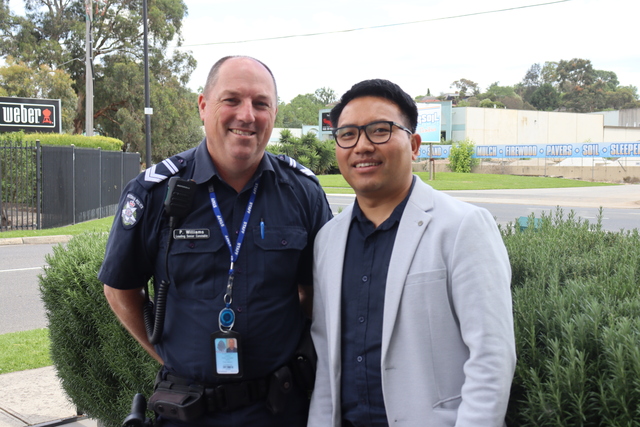
This is slowly changing, thanks to the collaboration between ACCEM and Lilydale’s Proactive Policing Unit.
When Leading Senior Constable Peter Williams began working and engaging with the Chin community 15 years ago, he said it took time to build trust and relationships, and a lot of learning.
“When we first came here, we tried to organise a camp with the young people. We said, we’ll run a camp. We’ll go down, we’ll do a surfing activity,” he said.
“When the flyer came out, it had actually had (the word) camp on it. Well, no one showed up. We spoke to the leaders, and it was one of them who said, ‘I see what the issue is. You put camp on the flyer’.
“They thought they were actually going to a camp that their parents talked about. A lot of these kids were now starting to be born here, and they mistrusted the police, saying, ‘we’re gonna put you in a camp’. They thought they weren’t coming back.”
Peter said this small phrase unintentionally traumatised these kids, and that was “the start of us saying we need to get to know this community and actually embed ourselves in it, and get them to embed themselves in our community, which they’ve done”.
Recalling two young boys, who were among the first to attend primary school in the east, Peter said, they didn’t know English, nor had they experienced formal education.
They were picked on for being different, “so they would get angry and fight,” leading to punishment from the principal. This only emphasised their mistrust of authority figures.
“The product was that when they got older, they started a gang because they galvanised life for life. We’ve been bullied, and it was those people who did it.
“They all stood together and retaliated. That’s grown now outside of that, but in saying that, the leaders of the community haven’t given up on continuing to try and work.”
Those two young boys ended up in jail at a point in their lives, and have since changed their ways.
“That’s a failure of the system in regard to not intervening along the way to try and deter them. We do things differently now, and they are not causing issues.
“That’s a credit to the community, us as police, if we engage with them, and themselves a little bit, for building upon what they had to, to change their ways.”
As someone on the outside looking in, and as a police officer, Peter said, “It’s easy just to say, ‘Oh, they’re all bad people’. They’re all good people, just some of them have lost their way”.
“The Burmese community actually gets community more than anyone else. The way they do events, everyone turns up. They all cook, they all help out.”
Ram said that with people like Peter and the many other support agencies willing to help, it has empowered the community to keep trying.
One thing the ACCEM has done is ask its community to make $50 contributions per year for a community fund, which is used for things like funding gravesites, but has also been put towards young people.
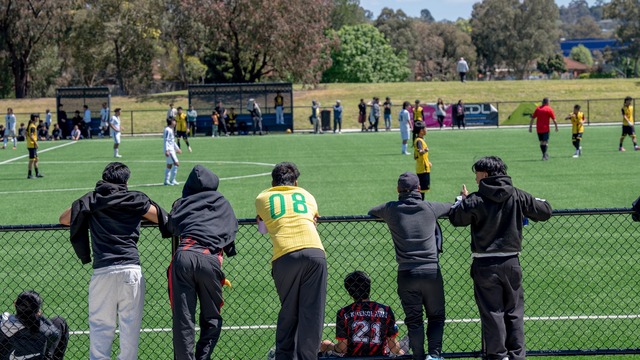
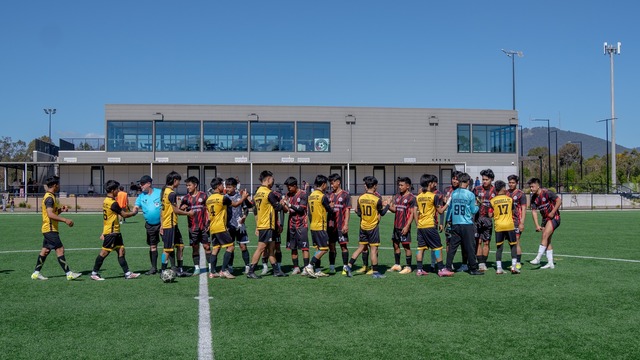
“We have been running events like a soccer programme, because we need to meet these young people where they are, using what we know they are interested in.
“We have been running a soccer programme, and they come, and that is where we often try to build a connection with them. It is very challenging because we have very limited resources, and all of us are volunteers. So it’s a very hard job, and we want to do it more.
Ram said if other organisations are able and willing to help run programmes that young people want to participate in, not only just for the Chin community but more broadly, he would welcome that.
“A lot of families in this community are struggling financially and psychologically. The financial struggle is very real in this community, because we are doing low-paying jobs, we are working on farms, we are working at factories, some may not have employment still.
“Parents can’t pay for formal sport…I have come across many young people wanting to join a soccer club, but they find it very hard to sustain because the parents are not able to support them on the weekend with transport, because the family has only one car.
“Most of the (young) people who have been identified as high risk in the community come from this sort of family environment.”
On the other side of this are the many young people who have graduated from high school and pursued university studies to develop careers as engineers, doctors and nurses, as well as those working in aged care homes and childcare.
One person has also pursued a career with Victoria Police, something Ram said “is for us, a big step”.