“It makes you look back on your life, and it’s a recognition that I was doing something worthwhile.”
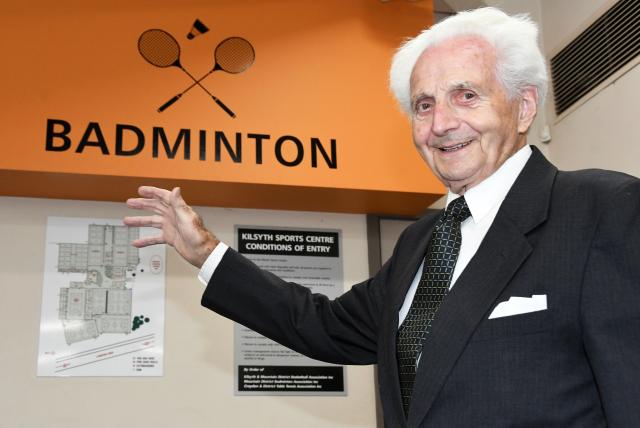
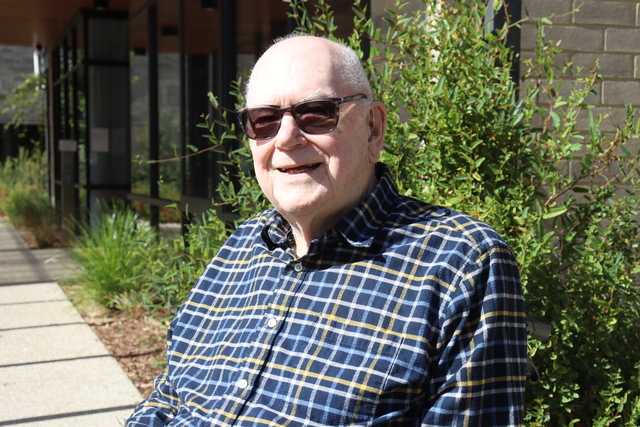
Lionel Parrott, 86, was awarded the Order of Australia Medal (OAM) as part of the Australia Day honours, recognising his service to the community in several ways but mostly for his commitment to guiding young people into careers.
And it was his own experience finding the right employment path and navigating university that allowed Mr Parrott to succeed in helping others.
“My second year at university was a complete disaster. It showed me that brilliant results are not the only thing; you can learn a lot from other situations,” he said.
Born in January 1940, Mr Parrott lived through the depression and was always encouraged by his father to get a “safe and easy job in the public service or bank”.
But with accounting being his best subject at school, Mr Parrott ignored his father’s advice to take on a traineeship with an accounting firm. He lasted 18 months.
Still wanting to pursue accounting, Mr Parrott took on a role as an accounts and records clerk at a distillery but soon decided it wasn’t the right environment for him.
“I looked at social work. And then I thought, I’m headed in the direction of the church. So I spent the next four years, more or less, doing an arts degree in history and philosophy, and working towards becoming a minister,” he said.
“Then I decided that wasn’t quite where I wanted to be, because you have this perception of people in the church being fairly close to perfect, but then I couldn’t handle the political side.”
Through a connection of his father’s, Mr Parrott acquired a job with a gas and fuel organisation.
“It got me into pretty well every corner of the gas and fuel, which meant getting a very good understanding of what people actually did,” he said.
Still struggling with this path, however, Mr Parrott sought work under a previous boss at Fibremakers in organisation and management work, solving organisational problems.
“I was asked to do a review of the personnel department, and at the end of that, the personnel manager said, ‘You wouldn’t want to be doing this for the rest of your life. What would you like to do?’
“I said, ‘Personnel work looks interesting’. I became the staff and employment officer at the age of about 26.”
It was through this role that he discovered his true path.
“We used to try to employ about eight graduates a year. So that meant we participated in the program that most universities run, which is getting companies to come out and talk to graduates interested in working.”
Mr Parrott applied for a role as a careers and development counsellor at Monash University. He unfortunately missed out the first time but reapplied a few months later and was successful.
“I used to tag along with (prospective students adviser Rick Belshaw) on a few of his visits to schools, talking about the advantages of staying in school. Not promoting Monash, just the concept of higher education,” Mr Parrott said.
“I counted up one time the number of organisations that I dealt with. It was more than 100.”
Mr Parrott built his career from counsellor to director of the career planning and development department, finishing his time at Monash University as acting manager of the professional development centre in 1997.
He was awarded a Monash University Fellowship in 2015.
Looking to improve education opportunities at every level, Mr Parrott sat on the executive committee for the Association of Independent Schools Victoria from 1989 to 1992.
He was also a founding member of the Independent Schools Victoria Block Grant Authority, which he served from 1990 to 2004.
It allowed independent schools to apply for a capital grant each year. Around 30 to 40 schools would typically apply, and Mr Parrott, alongside the chairman, would visit each school to understand the need.
“We noticed that some schools didn’t seem to have any clear direction about where they were going.
“So we were able to use the interest the money generated to set up building plans for the school that filled a much-needed gap.”
His passion for independent schools saw him advise the establishment of Billanook College in 1980, later serving as chair and becoming a life governor.
He later joined Billanook Primary School as a mentor.
“I spent 15 years mentoring children across a range of spectrums, from the very bright to the struggling. It was very rewarding.
“So that took me to a variety of activities, football, kicking a soccer ball, playing down ball, and Uno. And the kids didn’t mind cheating.”
Joining his colleague, Peter Harris, on a trip to Cairns, Mr Parrott worked to improve the longevity of attendance for young Indigenous students at a remote school.
While his career has spanned decades and institutions, Mr Parrot said it was always the chance encounters with former students who came to him seeking advice that made it worthwhile.
“I used to bump into people every so often. I bumped into (one student), and he said, ‘Do you remember me? You probably saved my life with the advice you gave me’.
“He was having doubts about accounting in his second year. I told him ‘Well, why don’t you defer the subjects that are causing you concern, but first talk to the academics, because you might be going a lot better than you think you are, and get yourself a job working as an accountant and see if you really like it.
“So that’s what he decided to do and it was what he wanted to do. He’s now a driving force.”